Why Cambodia
Why international agribusiness is moving to Cambodia
Lower costs, permissive foreign ownership, and a processing gap that rewards early entrants. The argument for Cambodia is not that it matches Vietnam or Thailand on infrastructure. It is that cost, untapped capacity and policy direction line up in a way its neighbours cannot offer.
Macro position
A large, growing agricultural export economy
Agriculture, forestry and fisheries accounted for 16.1 percent of Cambodia's GDP in 2025 (World Bank). The export side of the sector is growing quickly.
US$6.46bn
Agricultural exports in 2025, up 7.3% from US$6.02bn in 2024
MAFF, Jan 2026
11.7m t
Export volume in 2024, up 39% on 2023, shipped to 94 countries
MAFF via Phnom Penh Post
16.1%
Agriculture, forestry and fisheries share of GDP, 2025
World Bank WDI
Under its Agricultural Development Policy 2022–2030, the government prioritises nine strategic commodities: rice, cassava, rubber, cashew, mango, vegetables, aquaculture products, pepper, and sustainable wood. The direction of policy is explicit: move the sector from raw commodity export toward processed goods produced in country.
The core opportunity
The processing gap
Cambodia grows far more than it processes. The Asian Development Bank's sector assessment puts domestic processing at roughly 10 percent of agricultural output, with processed goods only about 8 percent of official exports by value.
~95%
of cassava, the country's second-largest export crop, leaves Cambodia in raw or minimally processed form. Exports reached 7.2 million tonnes worth US$1.3 billion in 2024, and Cambodia ranks fourth globally in cassava starch exports.
Sources: MAFF; Cambodianess
US$342m
invested in Cambodia's 19 large-scale rice mills, alongside nearly 19,600 small and medium mills. Processing capacity is growing, but remains far below the volume the country produces.
Source: Ministry of Industry, Sep 2024
The economics for an entrant are direct: raw commodities purchased at origin, value added in country under QIP tax incentives, and processed product exported through expanding port and air cargo infrastructure. Government policy supports exactly this move, with agro-industrial parks designated in Kampong Thom, Battambang and Kampong Speu provinces and dedicated incentives for agro-processing investment.
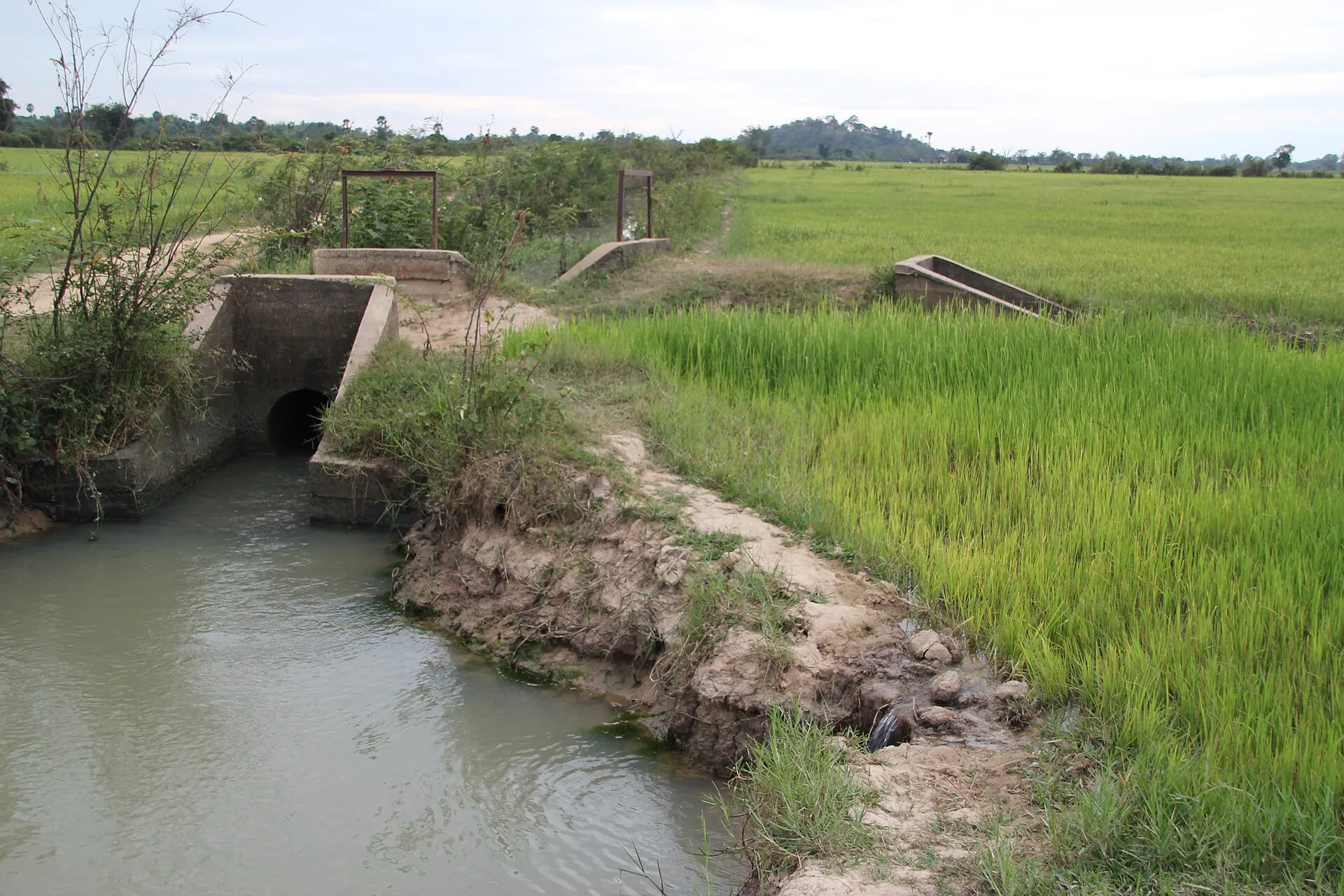
On the ground
Roughly 95 percent of cassava leaves the country unprocessed. That is the opportunity, measured.
Cost position
Cost advantages that survive scrutiny
Headline wages in the region look similar. The structural differences sit underneath them.
| Measure | Cambodia | Vietnam | Thailand |
|---|---|---|---|
| Statutory minimum wage, 2026 | US$210/mo (garment sector only) | US$141–202/mo by region | · |
| Average manufacturing wage | Market-determined in agriculture | · | ~US$435/mo (Q3 2024) |
| Employer social contributions | 5.4% | 21.5% + 2% union levy | Higher than Cambodia |
| Foreign company ownership | 100% in most sectors | Joint venture requirements in some sectors | Foreign Business Act restrictions |
Sources: DFDL; Vietnam Decree 293/2025; Thailand NSO; PwC Tax Summaries Cambodia and Vietnam (2026). Cambodia's pension contribution is scheduled to step up from 2027.
Cambodia's statutory minimum wage applies only to the garment, footwear and travel goods sector; agricultural wages are set by the market. The larger structural difference is the employer social contribution burden: currently 5.4 percent of wages in Cambodia against 21.5 percent in statutory contributions in Vietnam. For labour-intensive operations, that differential compounds across every worker on the payroll.
Openness
The most permissive ownership regime in its peer group
100%
Foreign ownership of companies permitted in most sectors
US State Dept ICS 2025
0
Restrictions on repatriation of capital or profits through authorised banks
US State Dept ICS 2025
50 yrs
Registered long-term land leases, renewable for further terms of up to 50 years
2001 Land Law; 2007 Civil Code
Foreign investors cannot own land directly: freehold title requires at least 51 percent Cambodian ownership. In practice, entry is structured through registered long-term leases or Cambodian-majority holding structures, both well-established routes that Whitewater designs with local counsel. Company registration itself runs through the CamDX online portal, typically within 8 to 10 working days.
Qualified Investment Project status adds the fiscal layer: a corporate income tax holiday of 3 to 9 years by activity category, running from first income, followed by six years of progressive relief, with duty-free import of capital goods. Agriculture, agro-industry and agro-processing are expressly listed as incentive-eligible sectors. Details on the Investment Guide.
Honest limits
What Cambodia does not offer
A serious case includes the constraints. Whitewater's role is to engineer around them, and some entrants should not come at all.
Cold chain infrastructure is at an early stage: the country's first port-linked, publicly accessible cold storage facility opened in Phnom Penh in January 2024, against an estimated need for 140,000 cubic metres of additional capacity by 2030 (InfraCo Asia). Only about 17 percent of rural roads are paved, though the Ministry of Rural Development targets 75 percent by 2030.
Judicial and regulatory predictability remain below Thai or Vietnamese levels, and land title clarity can be challenging in rural areas. These are exactly the conditions in which local knowledge, correct structuring and established relationships determine outcomes, and they are the reason Whitewater maintains an operating presence in country rather than advising from a distance.
Discuss your Cambodia entry strategy
Initial consultations are exploratory: an assessment of your objectives against Cambodian operating conditions, not a sales conversation.